

Women across the Shenandoah Valley and surrounding areas choose Shenandoah Oncology for ovarian cancer treatment. Our experienced team provides the most advanced treatments, including clinical trials, at our cancer center located in Winchester, Virginia. There is no hospital maze, and parking is easy. Each patient receives an individualized treatment plan with a personal touch. Knowing the specific type of ovarian cancer helps your oncology team determine the most effective treatment.
If you or a loved one was diagnosed with ovarian cancer, Shenandoah Oncology is here to help with expert care, compassion, and the latest treatments available.
Types of Ovarian Cancer
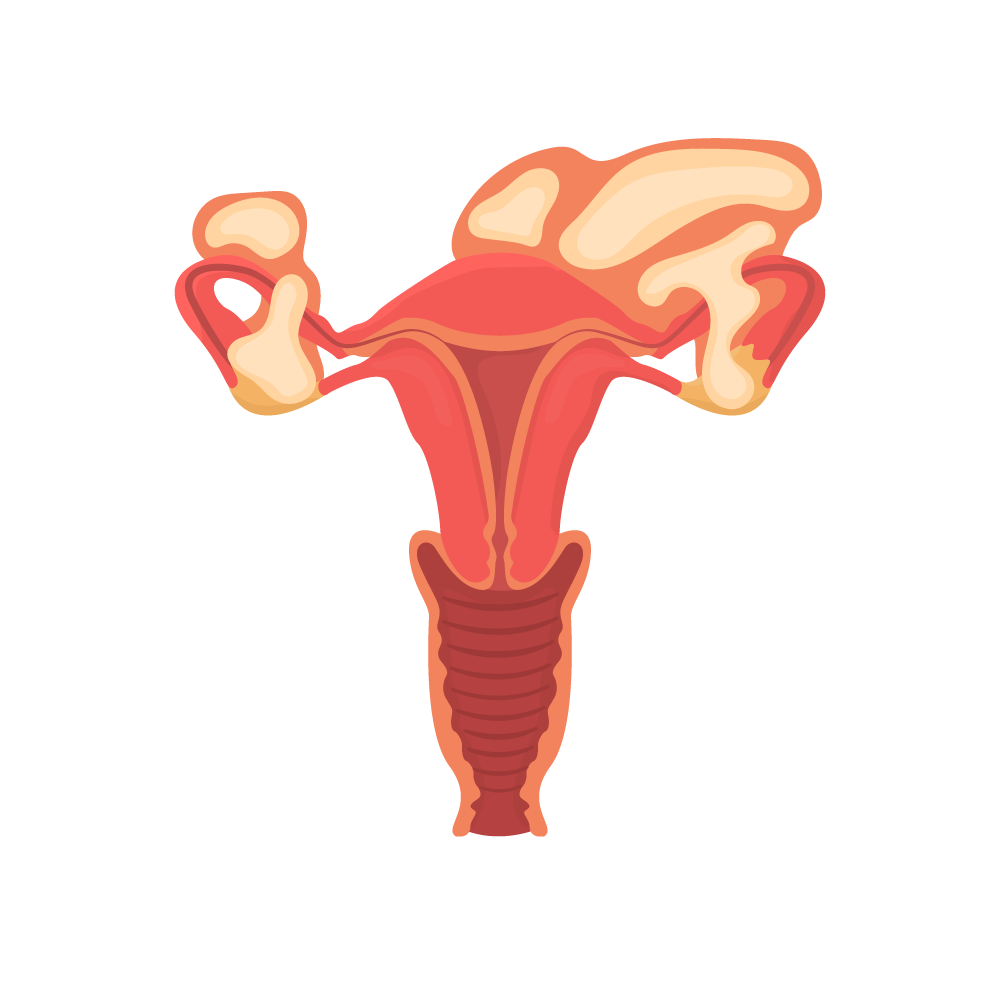
Ovarian cancer begins in the ovaries, the small organs on each side of the uterus that produce eggs and hormones. In some cases, the cancer can start in the nearby fallopian tubes or the peritoneum (the lining of the abdominal cavity). These areas are closely related and are treated similarly.
There are several types of ovarian cancer classified based on the type of cell in which the cancer begins:
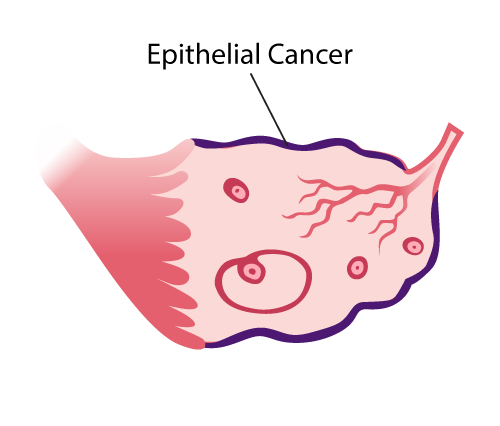
Epithelial ovarian carcinoma:
The most common type, starting in the cells that cover the outer surface of the ovary. Subtypes include serous (the most common), mucinous, endometrioid, and clear cell carcinoma.
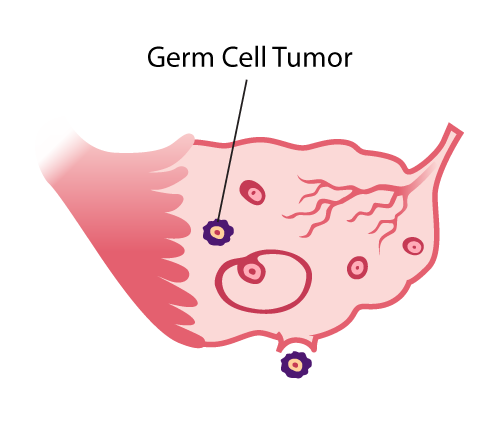
Germ cell tumors:
These begin in the cells that form eggs and are more likely to affect younger women.
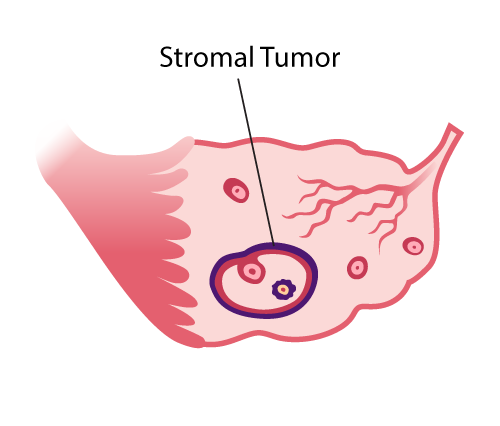
Stromal tumors:
A rare form that starts in hormone-producing ovarian tissue.
Symptoms of Ovarian Cancer
Ovarian cancer can be challenging to detect early because symptoms often develop gradually and mimic less serious conditions. It’s helpful to know what’s normal for your body so that you can talk with a doctor if you experience persistent or worsening symptoms such as:
-
Bloating that isn’t related to your menstrual cycle, or is more noticeable than you’ve experienced before.
-
Pelvic or abdominal pain
-
Bleeding after menopause, or abnormal vaginal bleeding if you are premenopausal
-
Feeling full quickly when eating
-
Frequent or urgent need to urinate
-
Fatigue
-
Indigestion or upset stomach
-
Back pain
-
Pain during intercourse
If you notice one or more of these symptoms, schedule an appointment with your gynecologist or primary care physician. They can run tests and perform a pelvic exam to find the cause of your symptoms.
How Is Ovarian Cancer Diagnosed?
If your doctor suspects ovarian cancer based on your symptoms or a pelvic exam, tests will be run to determine if a tumor is present.
-
Imaging tests: Transvaginal ultrasound, CT scans, or MRI to visualize the ovaries and surrounding areas.
-
CA-125 blood test: A tumor marker that will usually show high levels of the cancer antigen 125 protein in women with ovarian cancer.
If these tests indicate that a tumor is present, surgery will likely be scheduled to remove it. A sample of the tumor will be sent to a lab for a biopsy. This test is the final indicator of whether cancer is present. Information provided in the pathology report includes:
-
Type of ovarian cancer present, if any.
-
The grade of cancer. The higher the grade, the more abnormal the cells appear under a microscope.
-
Genetic alterations that may be present which will guide the treatment planning process.
Once cancer is confirmed, tests such as advanced imaging may be used to determine if cancer has grown beyond the ovaries.
At Shenandoah Oncology in Winchester, Virginia, we use the most advanced imaging and diagnostic tools to ensure a precise and timely diagnosis for women in the Shenandoah Valley, including Martinsburg, WV, and Harrisonburg, VA. We also review the genetic make-up of the cancer to determine if a specific therapy would be most effective.
Genetic Testing for Ovarian Cancer
If you were diagnosed with epithelial ovarian cancer, your oncology team at Shenandoah Oncology will likely recommend genetic counseling and testing — even if you do not have a family history of cancer. Tests are run for both inherited genetic alterations and somatic (not inherited) genetic changes.
Genetic testing looks for inherited alterations in the BRCA1 and BRCA2 genes. Tests will also likely also look at other genes including RAD51C, RAD51D, BRIP1, and those related to Lynch syndrome (e.g., MLH1, MSH2, MSH6, PMS2) to determine if there are any inherited genetic changes present that can increase the risk of ovarian, breast and prostate cancer for you and your family members. These tests also give your oncologist an indication of whether a PARP inhibitor targeted therapy will be effective. These medications make it harder for tumor cells with an abnormal BRCA gene to repair itself and reproduce leading to the death of the cancer cells.
Genomic testing is also performed on the tissue sample to look for genetic changes in the tumor cells that were not inherited.
-
Folate receptor-alpha (FR-alpha) testing can identify tumors with a high level of the FR-alpha protein. This alteration is likely to respond to targeted therapy.
-
Microsatellite instability (MSI) and mismatch repair (MMR) gene changes are assessed to determine if immunotherapy checkpoint inhibitors would be effective in the treatment plan.
-
NTRK gene mutations are occasionally performed to determine if a targeted therapy could be an option.
These tests help our team at Shenandoah Oncology offer the most personalized care possible.
What Are the Stages of Ovarian Cancer?
The stage of ovarian cancer plays a primary role in choosing the best treatment plan. Oncologists use the TNM system, developed by the American Joint Committee on Cancer (AJCC), to classify the cancer based on:
- Tumor (T) – How far the primary tumor has grown in and around the ovaries or fallopian tubes.
- Lymph Node Involvement (N) – Whether the cancer has spread to nearby lymph nodes.
- Metastasis (M) – Whether the cancer has spread to distant organs.
After TNM categories are determined through surgery and imaging, they are grouped into stages I through IV:

Stage I (T1, N0, M0):
Cancer is limited to one or both ovaries or fallopian tubes. There is no spread to lymph nodes or distant organs.

Stage II (T2, N0, M0):
Cancer has spread to other pelvic organs, such as the uterus or bladder. There is no lymph node involvement or distant spread.

Stage III (T1–T3, N1 and/or M0):
Cancer has spread to the abdominal lining (peritoneum) outside the pelvis and/or nearby lymph nodes.
-
Stage IIIA: Microscopic spread to lymph nodes or peritoneal surfaces.
-
Stage IIIB: Visible spread (≤2 cm) in the abdomen.
-
Stage IIIC: Visible spread (>2 cm) and/or cancer in regional lymph nodes.
Stage IV (Any T, any N, M1):
Cancer has spread to distant organs outside the abdominal area, such as the liver or lungs.
-
Stage IVA: Malignant pleural effusion (fluid in lungs containing cancer cells).
-
Stage IVB: Distant metastasis to organs like the liver, spleen, or lymph nodes outside the abdomen.
The staging information allows us to build a highly personalized treatment plan for patients in Virginia, West Virginia, and Western Maryland.
What Are the Treatments Available for Ovarian Cancer?
At Shenandoah Oncology, we offer state-of-the-art ovarian cancer treatment close to home in Winchester, Virginia, with no need to drive to another region. Our patients from surrounding areas like Martinsburg and Harrisonburg benefit from expert care, convenient access, and lower treatment costs in a supportive, personalized environment.
Surgery
Surgical removal of the tumor is often the first step in treating ovarian cancer. Depending on the extent of the disease, this may include removal of one or both ovaries, fallopian tubes, the uterus, and surrounding tissue or lymph nodes.
Chemotherapy for Ovarian Cancer
Chemotherapy is often used after surgery to kill remaining cancer cells. In some cases, it may also be used before surgery to shrink the tumor. Treatment may be given intravenously or directly into the abdomen, called intraperitoneal chemotherapy.
At our cancer center, chemotherapy is administered by experienced oncology nurses in a comfortable, patient-centered setting.
Ovarian Cancer Targeted Therapy
These drugs attack specific vulnerabilities in cancer cells. For ovarian cancer, PARP inhibitors like olaparib, rucaparib, or niraparib are often used, especially in patients with BRCA mutations or HRD-positive tumors.
Hormone Therapy
Some ovarian cancers, such as stromal tumors, may respond to drugs that block hormones or lower hormone levels.
Immunotherapy and Clinical Trials for Ovarian Cancer
While immunotherapy is not standard for all ovarian cancers, Shenandoah Oncology offers access to clinical trials and cutting-edge research that may include immunotherapy or new targeted treatments for eligible patients.
Why Choose Shenandoah Oncology for Ovarian Cancer Care?
Women across the Shenandoah Valley — from Harrisonburg, VA, to Martinsburg, WV — choose Shenandoah Oncology for ovarian cancer treatment because we offer:
-
Advanced treatment options, including targeted therapies and immunotherapies to counter genetic mutations and access to clinical trials.
-
Easy-to-access cancer center in Winchester, Virginia serving the Shenandoah Valley, the West Virginia panhandle, and western Maryland.
-
Proven lower costs for the most advanced cancer care compared to hospital-based outpatient cancer center.
-
A personal touch, where you’re treated like family, not a number.
If you or a loved one was diagnosed with ovarian cancer, Shenandoah Oncology is here to help with expert care, compassion, and the most current treatments available.